

Late last year it had become clear that Standard Co's use of AI was clunky, uneven, and totally not uniform. TJ was deep into OpenAI, Alex was feeing Gemini, the product team loved Claude, and we were even tinkering with Azure AI / CoPilot. Some people were deep into it; others were barely scratching the surface. And we had no shared standards: no consistent project structure, no agreed-upon way to handle context between sessions, no common approach to secrets management or deployment.
That's a problem when you're building products that have to stay maintained, debugged, and understandable by more than one person. And it is especially a problem when two things converge: your products start to scale and your company philosophy is to stay bootstrapped (that is, ain't nobody owning this thing but us).
During our company offsite and planning meeting in Austin this pastJanuary, we locked ourselves in a hipster hotel conference room, loaded up on coffee, coca-cola, and beer, and decided to figure out our company strategy. What emerged was a clear strategy aligning around Anthropic's Claude ecosystem. Since models / standards / and the tools are changing literally daily, we've created a 6 months series where we share what we've learned, how we're doing things, what works, and what doesn't. It was originally intended only for us at Standard Co. But we've decided to share it with you. Below is a highlevel outline of what we're covering in the sessions. You can also visit our public notion page that has a lot more detail, slides, loom videos of the session, and other tips and tricks we've learned. Interested in attending? Drop me a line (don't worry, this is totally free -- we're not trying to charge people for this).
We started with the foundation: where AI actually fits in the development workflow in 2026, and why it matters that we get on the same page about it.
Claude Code is for developers. Claude Cowork is for everyone else — and honestly, for developers who don't want to be in a terminal. We walked through both, covered shared project standards (what goes in CLAUDE.md, how to structure /.claude/, what lives in rules vs. skills vs. MCPs), and talked through data privacy practices — specifically how we think about PII and de-identification when AI is involved in a project.
We also demoed multi-agent code review, auto mode, and touched on secrets management — because protecting AWS credentials in an AI-assisted workflow is not something you want to figure out after something goes wrong.
Loom video -- https://www.loom.com/share/8ef4f0879d6c457dbcb513dc7ad7b80f
Slides -- https://docs.google.com/presentation/d/1b2Bno7izzYmRHdLUfGGidbKPz12t3Mdz/edit?usp=sharing&rtpof=true&sd=true
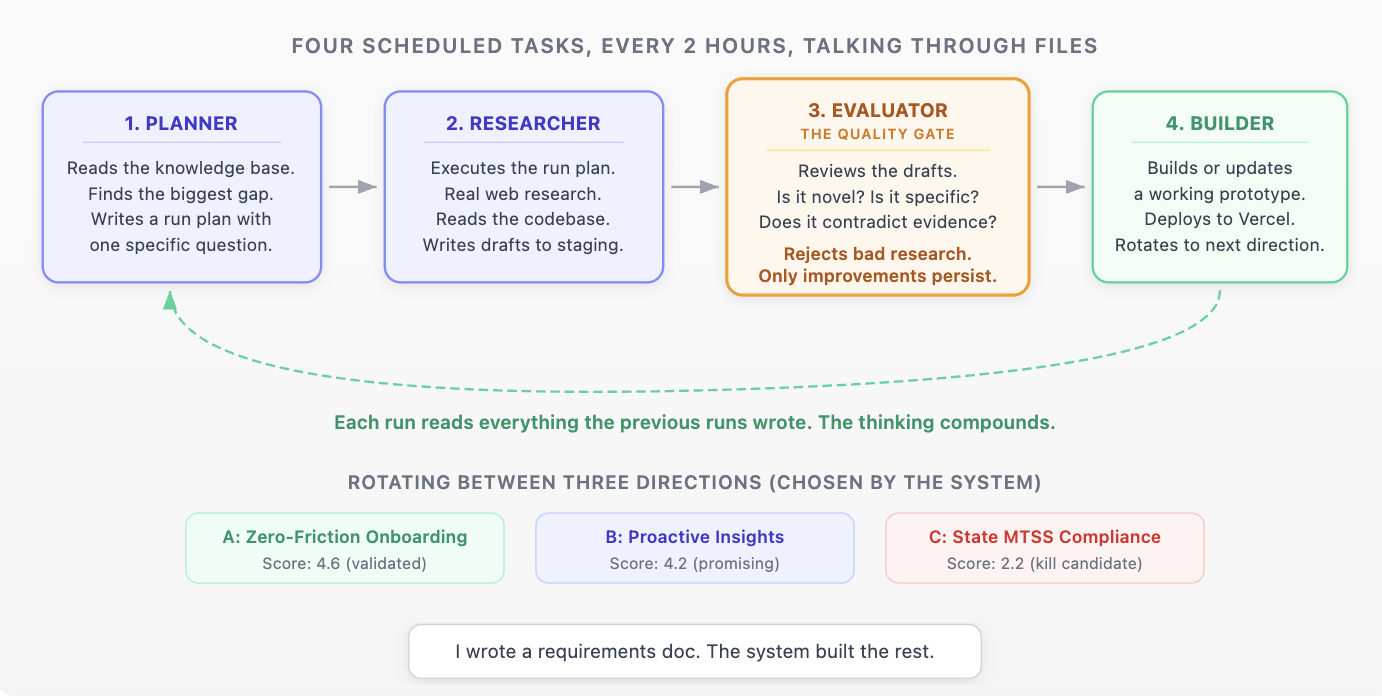
Jason, product lead for Standard Education, walks through how he uses Claude Cowork to research, vet, and prototype new product features. This is a can't miss part of the presentation and deserved it's own section.
https://sharing.ia.net/presenter/c0145a50f33244959f94192191416277/view
Coming up: how to structure your project so AI context doesn't fall apart between sessions, handoffs, or teammates. CLAUDE.md and ./claude/ in depth — what to put in them, how to keep them useful over time, and how to avoid the thing where you have to re-explain the same project every time you open a new session.
The demo-first format has been the right call. Nobody wants a 45-minute slideshow about AI theory — they want to see the thing actually work, then understand why. We lead with the demo, then explain the mechanics.
We've also found that the questions are where the real content lives. The framing of "how do we source-control an agent someone builds for internal use?" — so that it's visible, maintainable, and not just living on one person's laptop — is the kind of thing you only surface when people are engaged enough to ask. That one's on the roadmap for a future session.
AI-assisted development isn't a shortcut. It rewards teams that put in the work to set up good project structure, clear context, and shared standards — and it punishes teams that don't. The point of this series isn't to make everyone a power user. It's to get the whole team above the floor where the tools start actually helping.
We're not done yet, but the early signal is good. Check back with us monthly.
Standard Co builds data platforms and AI consulting services for global health and education organizations. Drop us a line if you're interested in talking.
151 Ted Turner Drive, Atlanta, GA
Let's talk: info@standardco.de