

Our kickoff session introduced Claude Code and Cowork as Standard Co's default way to build software. We covered how AI-first development has shifted the engineer's role from writing every line to directing agents toward outcomes, and why shared standards matter once every repo in the org runs on AI.
We walked through the tooling that makes it work — auto-mode for autonomous multi-file changes, scheduled tasks, Dispatch from your phone, and MCP integrations with the tools we already use — before closing with live demos of Claude Code and Cowork in real workflows.
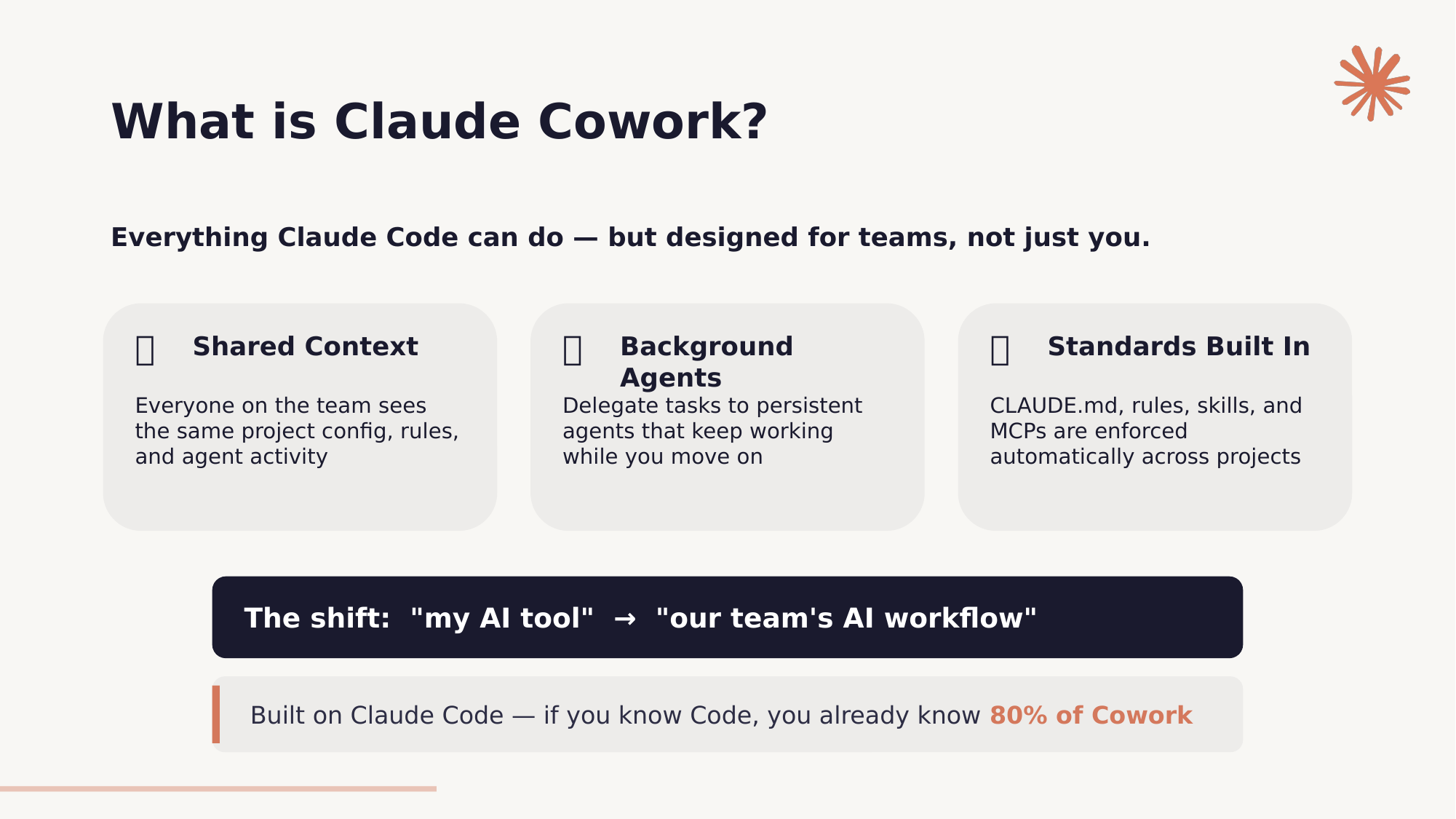
Claude Code is an agentic coding tool you drive from the terminal, IDE, or web — it reasons about your whole project, plans changes, and writes and runs code. Claude Cowork uses the same engine but is built for teams: shared project context, background agents, and standards applied across everyone's work. If you know Code, you already know most of Cowork.
Auto-mode lets Claude run autonomously — reading, writing, testing, and iterating without stopping to ask permission at every step. It is ideal for framework migrations, boilerplate generation, test coverage, and bulk refactors. You still review the output before merging.
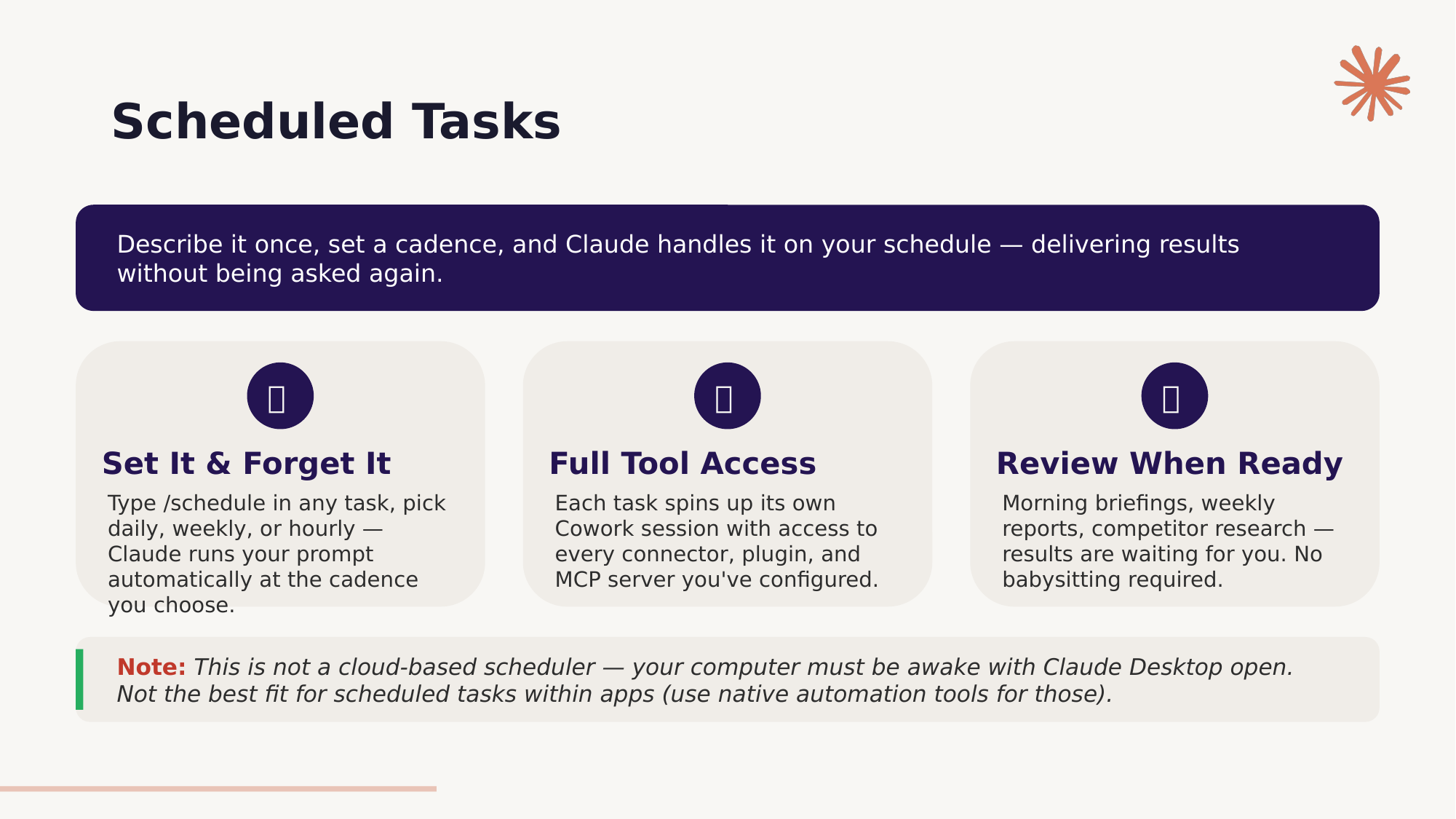
Yes. With scheduled tasks you describe a job once, pick a cadence such as daily, weekly, or hourly, and Claude runs it automatically with access to your connectors. Today it runs on your own machine, so your computer needs to be awake with the app open for scheduled runs to fire.
MCP (Model Context Protocol) is the open standard that lets Claude connect to your real tools and data — databases, internal APIs, Notion, Slack, GitHub, and more. Sharing MCP configuration across the team means everyone gets the same integrations without per-person setup.
No. Although Cowork is built on a coding tool, it is designed so any team can automate everyday work — reports, digests, triage, and research — by describing tasks in plain English.
We run these every month. Email me and I'll add you to the invite.
Email TJ151 Ted Turner Drive, Atlanta, GA
Let's talk: info@standardco.de