

What agents are, what they can do, and how they actually work in Cowork. We drew the line between a chatbot that answers and an agent that does the task — planning the steps, using your connectors, and acting while you keep the final say.
We followed a Cowork agent through a real customer-success job end to end, covered good agent design (persona, tools, task, frequency, exceptions), and talked honestly about today's big limitation: agents run on your machine, for now. The takeaway — pick one small, repeatable job this week and let an agent draft it.
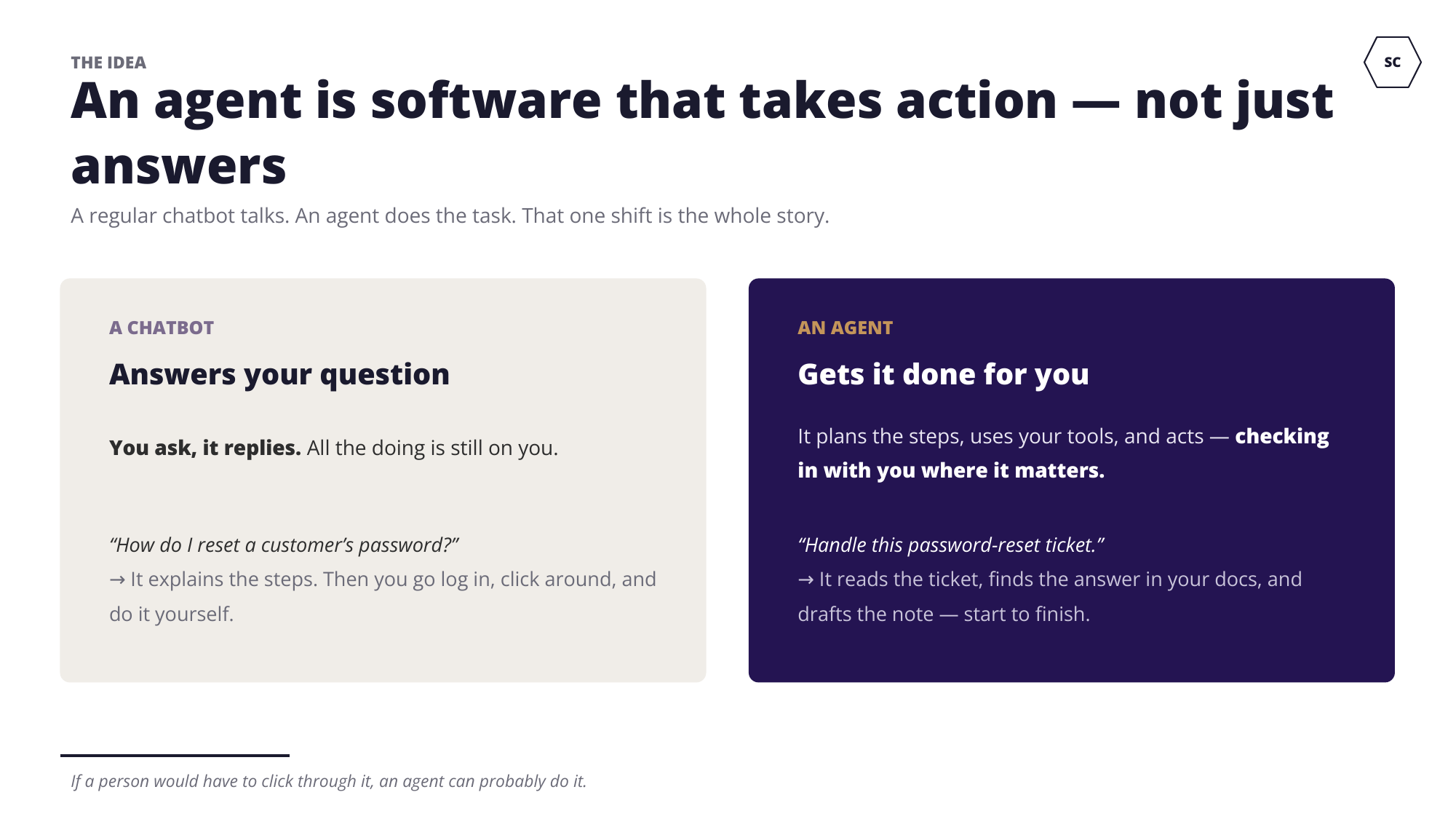
An agent is software that takes action, not just answers. Where a chatbot explains how to do something, an agent plans the steps, uses your connected tools, and completes the task — checking in with you where it matters.
A chatbot replies to your question and leaves the doing to you. An agent reads the ticket, finds the answer in your docs, drafts the response, and finishes the job end to end. Rule of thumb: if a person would click through it, an agent can probably do it.
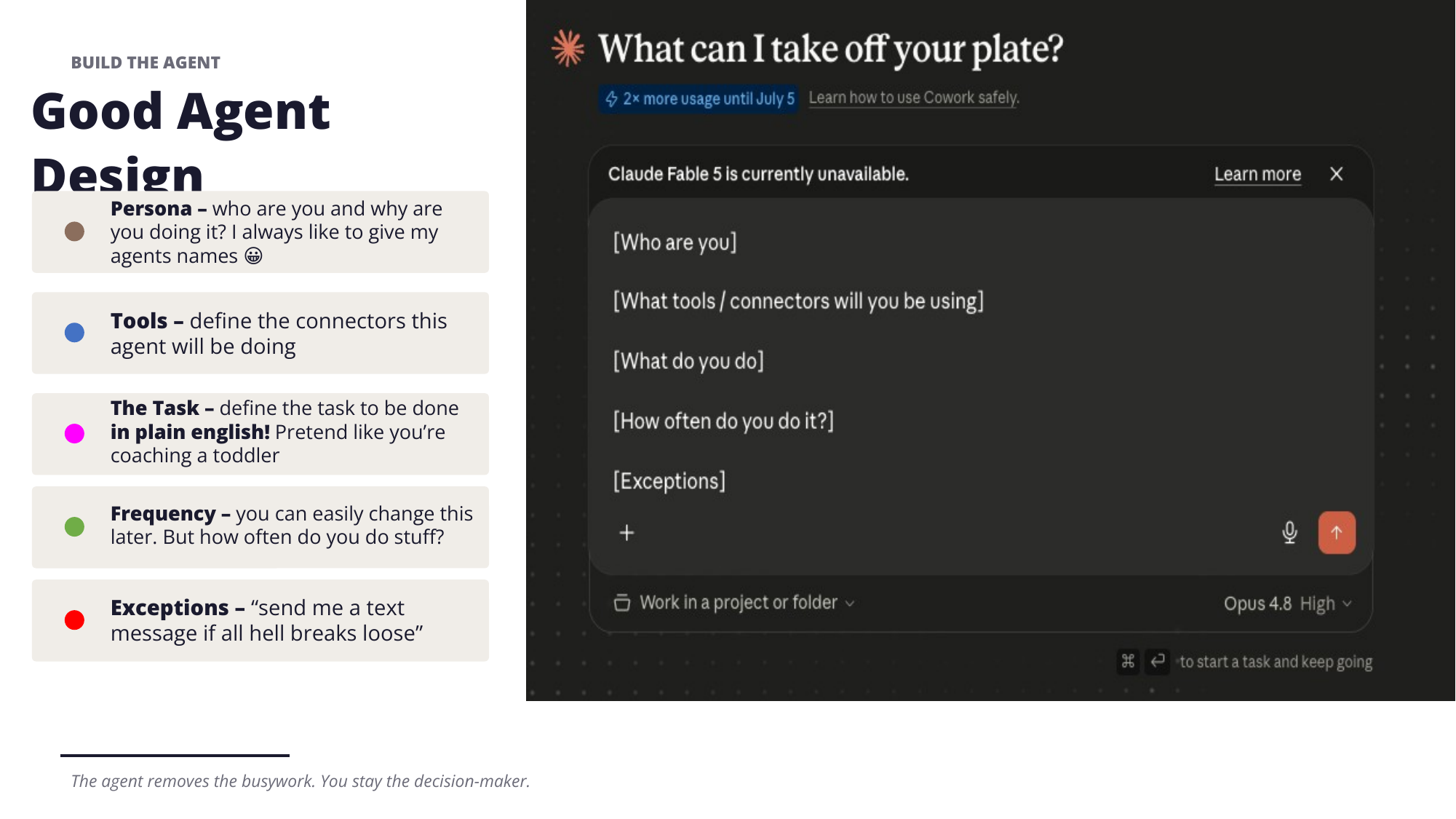
Five things: a persona (who it is and why), the tools or connectors it can use, the task described in plain English, a frequency, and exceptions for when it should alert you. Define those and you have a working agent.
Today they run locally on your machine, not on an always-on server. A scheduled run will not fire if your laptop is asleep, and closing the app stops a running task. Cloud hosting is on the roadmap; for now, keep the machine awake for scheduled jobs.
Pick one small, repeatable job you would rather not do — a triage step, a weekly digest, a report — let the agent draft it, and keep the final say. Start small and grow from there.
We run these every month. Email me and I'll add you to the invite.
Email TJ151 Ted Turner Drive, Atlanta, GA
Let's talk: info@standardco.de